Story 03 · Dubai · 4-minute read
When the Creek Became a Market of Scent
From Deira’s lanes to a network reaching beyond the port
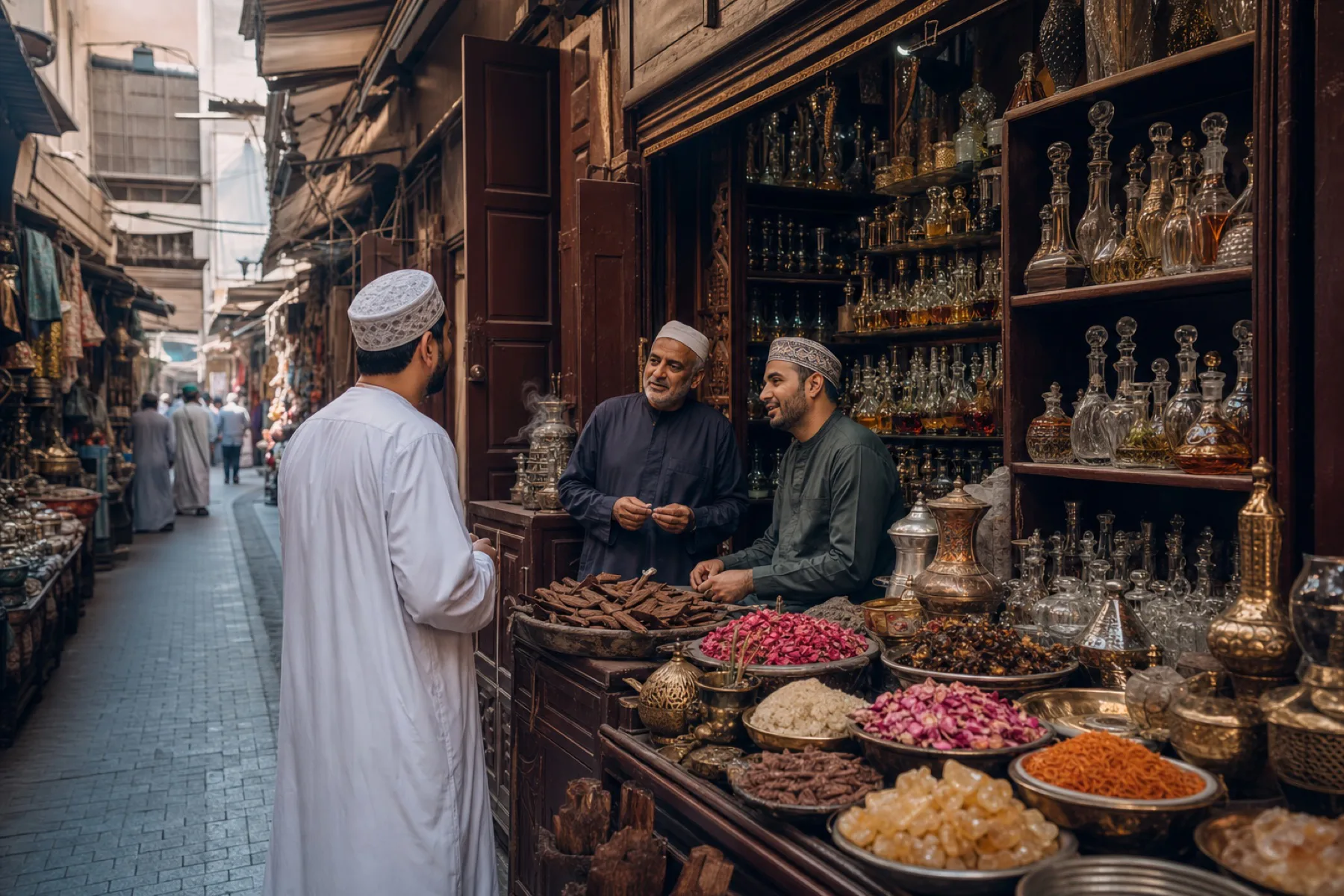
The abra crosses the Creek in minutes. Yet moving from Bur Dubai to Deira feels like entering another layer of the city: cardamom, saffron, dried rose, and frankincense, then a shop window lined with bottles of oud oil. A complete map is not always necessary. Sometimes it is enough to follow the scent.
A Market Selling Material and Story
Deira’s Spice Souk offers herbs, oils, saffron, rose petals, and frankincense. Nearby, the Perfume Souk presents oud, concentrated oils, incense, and floral compositions. A product rarely arrives alone; the seller explains where it came from, how it is burned, and which drop belongs on cloth, hair, or a special occasion.
Many natural materials sold here come from outside the Emirates: oud from South and Southeast Asia, frankincense from Oman and Yemen, and flowers, saffron, and oils from many regions. Dubai’s role is not to claim that everything grew here, but to gather, sort, blend, package, and send it onward to other markets.
From Shopfront to Re-export Hub
Dubai Customs figures show the scale this role reached. In 2017, Dubai’s foreign trade in perfumes and beauty products was valued at about AED20 billion: AED11.5 billion in imports and AED8.34 billion in exports and re-exports. Saudi Arabia, the United States, and Oman were leading destinations for exports and re-exports that year.
This is a dated historical snapshot, not a description of today’s market size. It nevertheless makes the mechanism visible: goods arrive in Dubai and depart in new directions. The traded categories include liquid and solid perfumes, cologne, and perfume preparations, alongside associated beauty and personal-care products.
What Does Dubai Make?
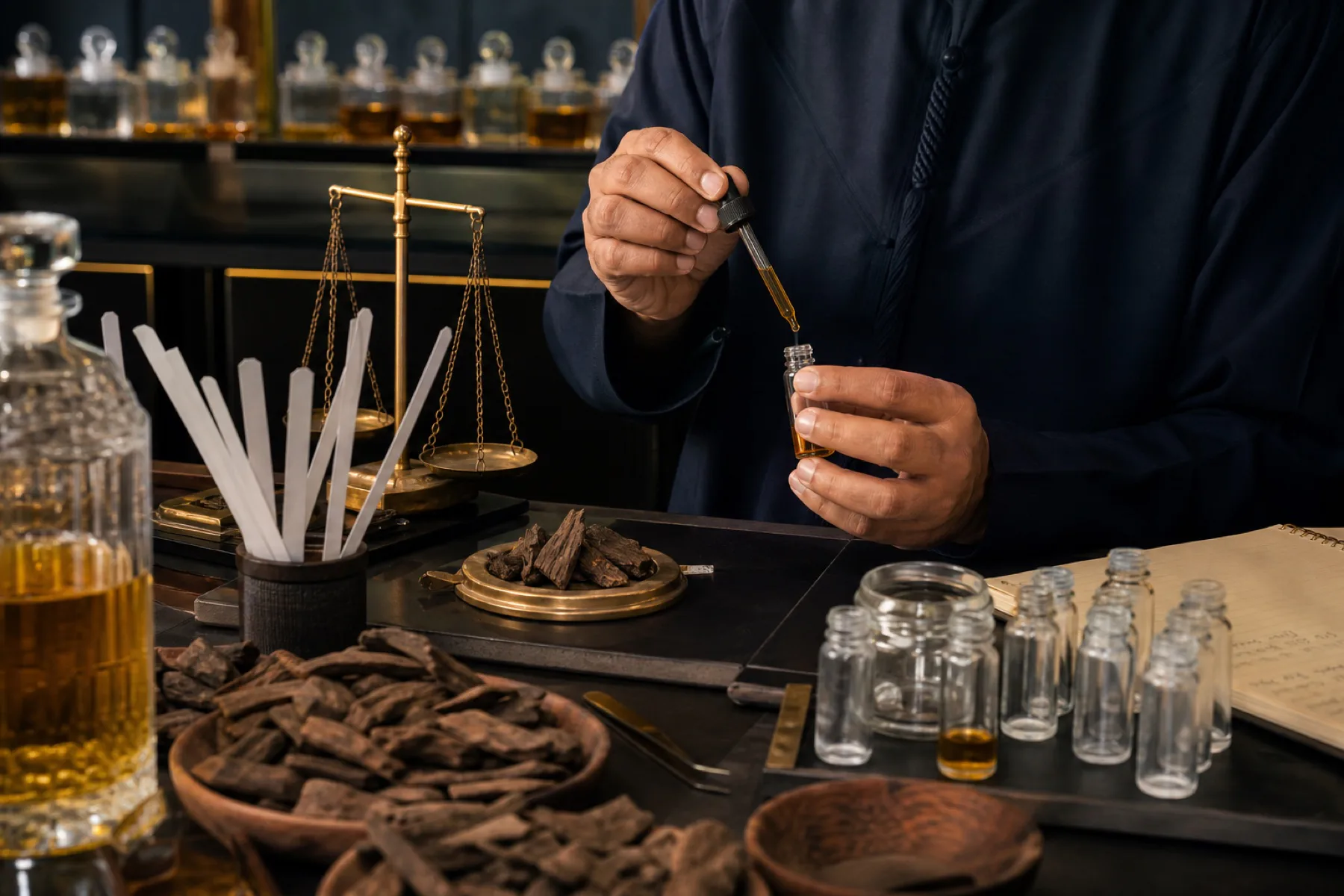
Manufacturing here does not always mean growing the raw material. An imported oil, wood, or aromatic compound may enter a laboratory or workshop for blending, fixation, and ageing, then move into filling, packaging, and brand design. Between the traditional perfume house and the modern factory lies a wide field of craft: dukhoon, room scents, oils, concentrated perfumes, incense, and compositions designed for Gulf taste or an international audience.
Trade fairs, shipping networks, logistics zones, wholesalers, and retailers support this chain. A visitor in Deira may purchase a single tola of perfume while, in the same city, larger consignments move toward regional and global markets.
A Scent That Does Not Stop at the Creek
The Creek was the city’s entrance, then became a symbol of how it works: receive, sort, exchange, and begin another journey. The Perfume Souk preserves a human scene amid the large figures—a seller opens a bottle, a customer tests one drop on skin, and a brief silence comes before the words: this is the one.