From the Land of Frankincense to the Ports and Majlis of the Emirates
Before perfume was held in a bottle, it was a tree, a caravan, a ship, and a memory passed from hand to hand.
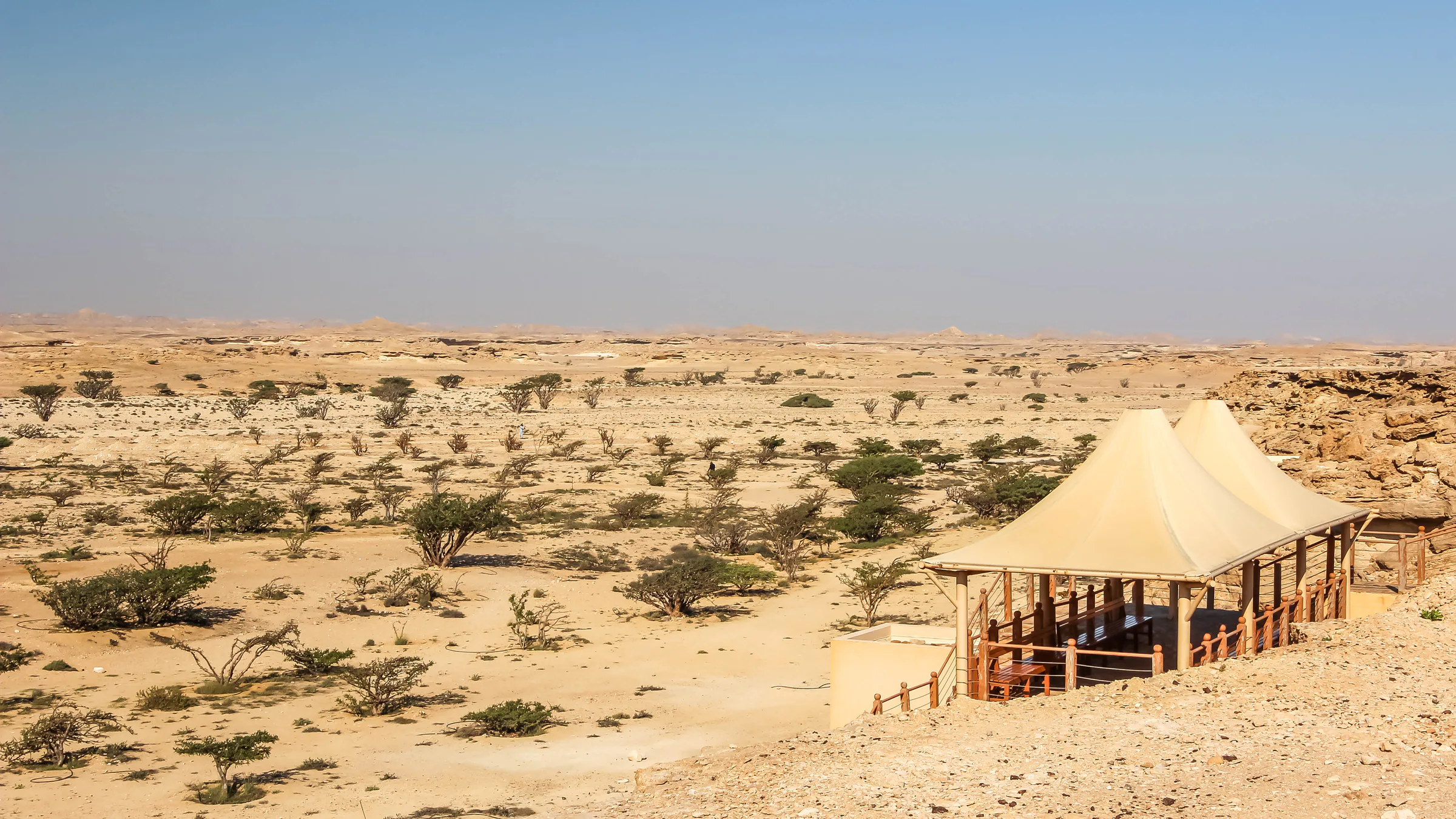
Wadi Dawkah, Dhofar · Thomas Liptak · CC BY-SA 4.0
The story begins
The Fragrance That Drew a Route
The Arabian Peninsula holds a pivotal place in the history of aromatic materials. Its south produced frankincense; its ports joined the networks of the Indian Ocean; and its communities made scent a language of hospitality, celebration, and devotion. This is not the story of one industry, but of movement—from tree to market, ship to home, and inherited recipe to the modern perfume house.
At dawn, as Dhofar’s air softens and frankincense trees emerge along the wadi, the story begins with a drop of resin. Frankincense was more than a fragrance: it was a precious material carried by caravans and ships from southern Arabia to the ports of the ancient world. The trees of Wadi Dawkah and the ports of Khor Rori and Al-Baleed remain physical witnesses to a trade that endured for centuries.
02
Chapter Two · The Islamic World
When Scent Became a Science
In the laboratories of the Islamic world, knowledge of scent moved from recipe to measurement and experiment. Al-Kindi documented numerous formulas and methods for making perfumes, while scholars and chemists developed tools for distillation and extraction. It is more accurate to say they expanded and refined this knowledge than to attribute its invention to one person.
03
Chapter Three · Julfar
A Gateway of Wind and Shell
On the coast near the Strait of Hormuz, Julfar grew as a port and trading city. Early Arab sources mention it, while archaeology reveals wide maritime connections. The historical Oman Coast is best understood as a connected seascape: ports exchanging vessels, goods, and news—not a set of modern borders projected onto the past.
04
Chapter Four · The Open Sea
Sails Carrying Scent
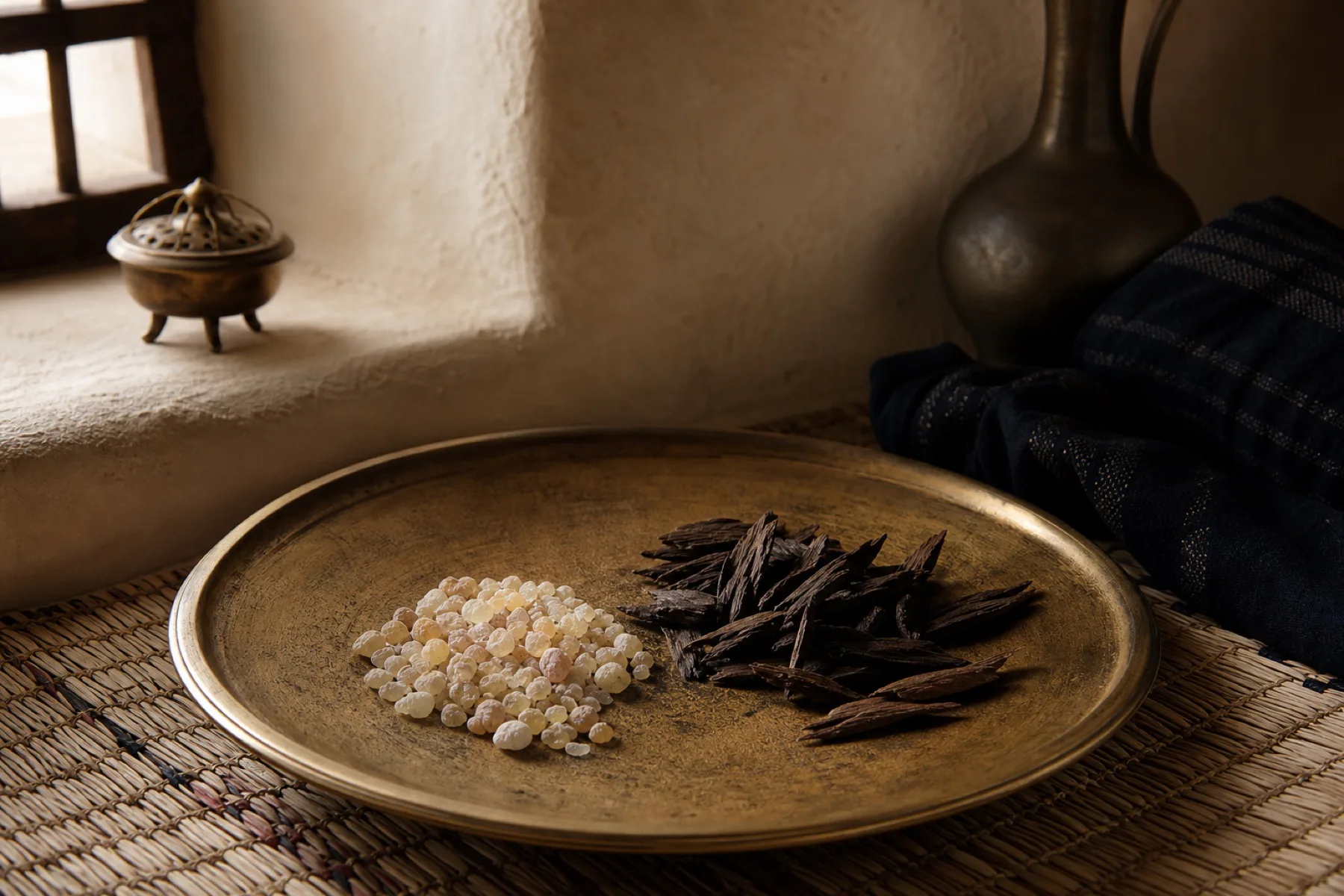
Sailing vessels carried pearls and dates to India and returned with textiles, spices, and aromatic materials. As commerce expanded in the nineteenth and twentieth centuries, merchants of the coast strengthened their connections with Bombay and the ports of the Indian Ocean. Oud arrived from the Indian subcontinent and Southeast Asia, and merchants learned to distinguish its woods and oils by aroma, density, and age.
Two materials, two routes: frankincense from southern Arabia and oud carried through the Indian Ocean network.
05
Chapter Five · The Home
A Recipe Kept by Memory
When the materials reached the home, another craft began: dukhoon, mabthooth, and mukhammariya. Women in the Emirates blended wood with perfumes, oils, rose, and saffron, and each household shaped its own method. Much of this knowledge belongs to oral memory. Its value lies in the continuity of the practice, even when its beginnings cannot be assigned an exact date.
06
Chapter Six · Majlis and Celebration
A Cloud of Welcome
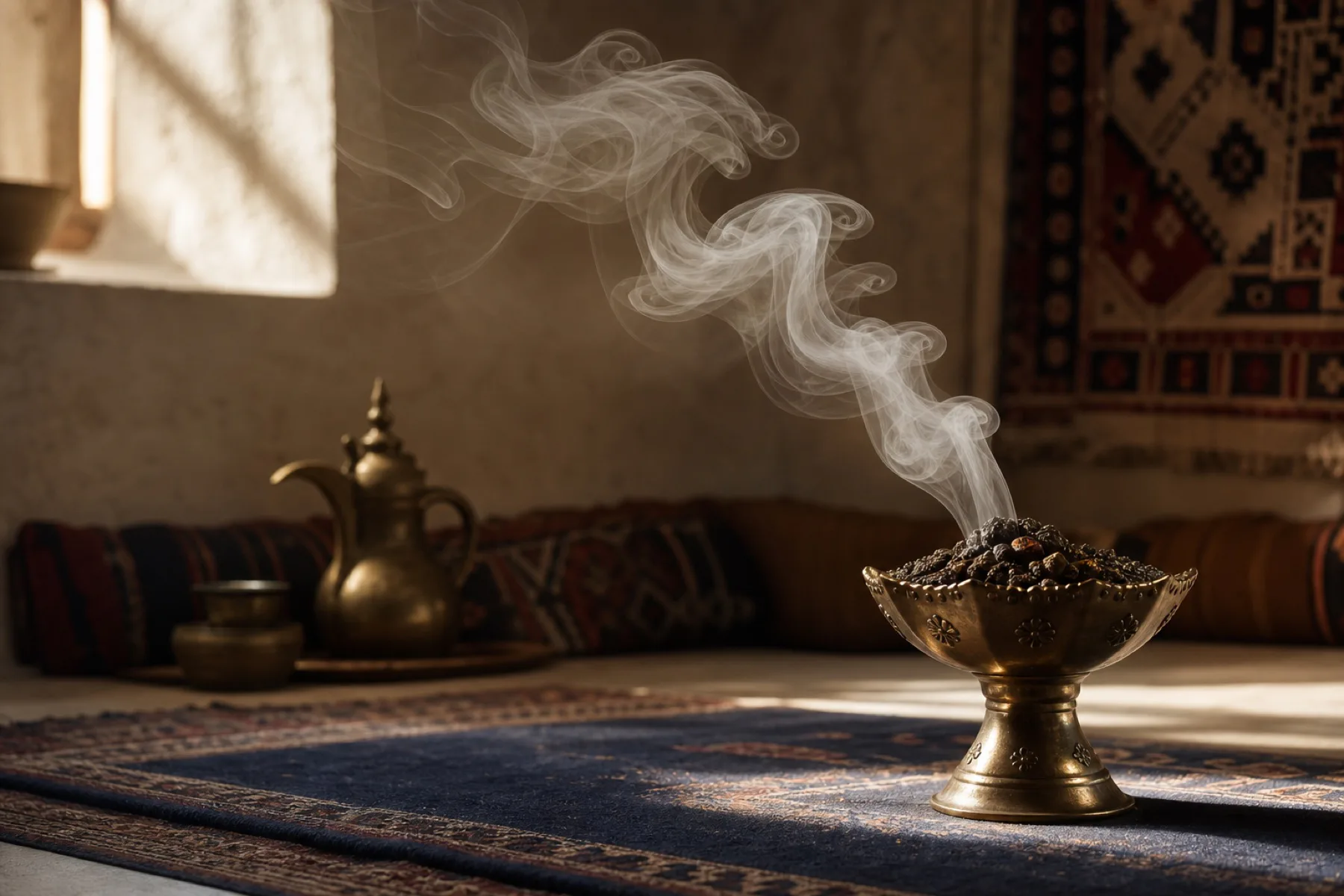
The incense burner passes among guests after coffee, allowing each person to perfume their clothes before returning it. At weddings, garments and hair are scented, making fragrance part of preparing the bride and receiving guests. During Eid, perfume brings together cleanliness, joy, and gathering: an invisible presence made visible through its social effect.
A cloud of welcome: dukhoon perfumes the room and announces hospitality to the guest.
07
Chapter Seven · The Emirates Today
Heritage in a Bottle
Family blends entered the laboratory and the boutique, emerging as an Emirati industry that speaks two languages: the language of oud, musk, and dukhoon, and the language of global design. The thread between them was never broken. The vessel changed, while scent remained a way to express identity, honour a guest, and preserve memory.
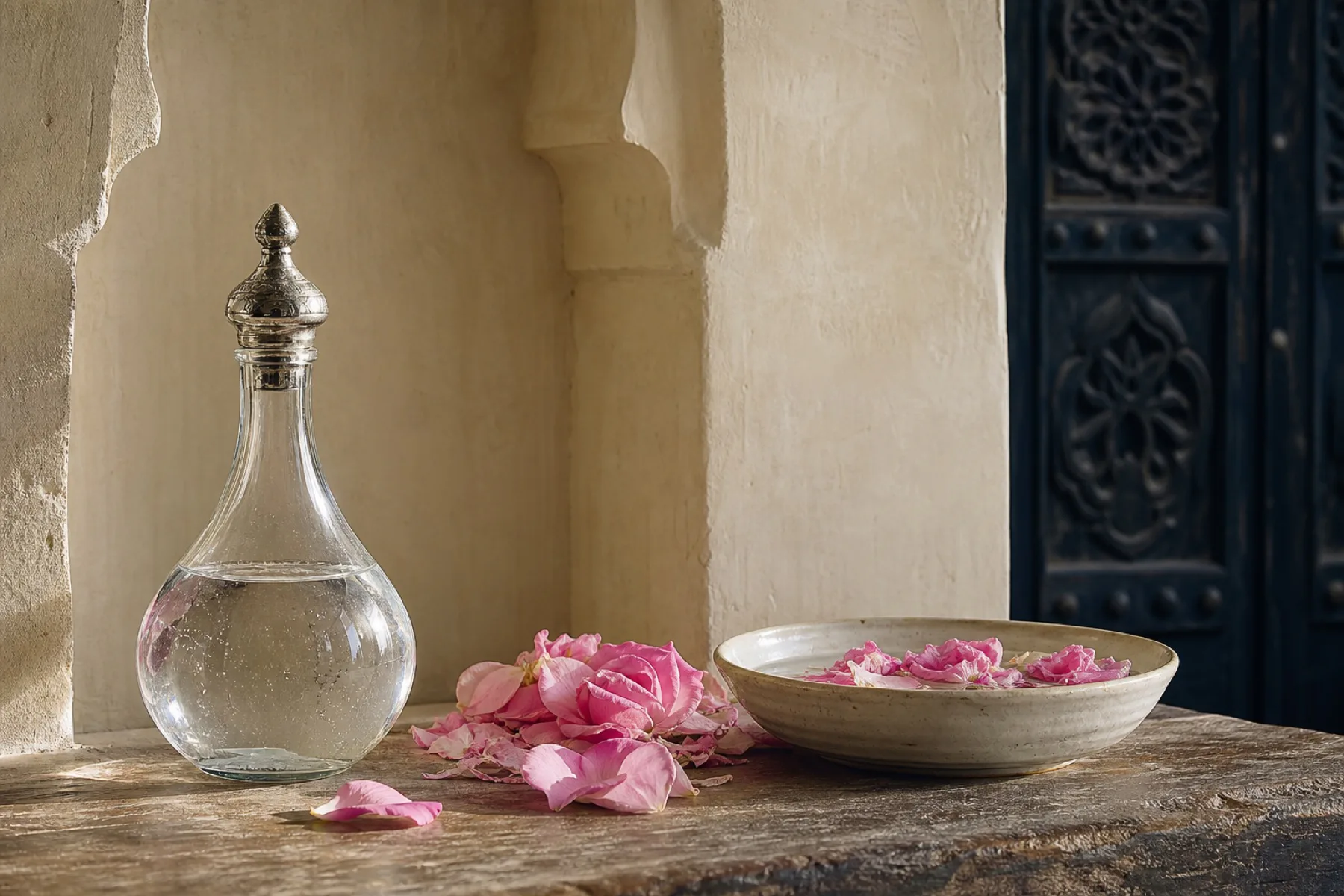
Rose water: from distillation and hospitality to a contemporary image that preserves the trace of craft.
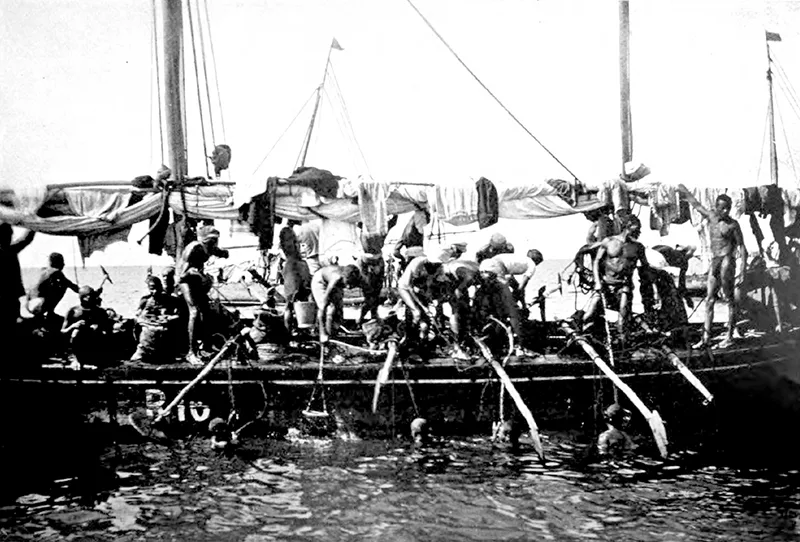
The sea was both livelihood and road. Arab pearl divers in the Gulf, early twentieth century. Public-domain image.
A vocabulary of scent
Four Materials, Four Stories
Frankincense
Resin from Boswellia trees in Dhofar; a material of trade, ritual, and medicine since antiquity.
Oud
Resinous wood from South and Southeast Asia; carried by trade and made a measure of luxury in the Gulf.
Dukhoon
A home-blended incense mixture burned over charcoal, revealing the maker’s skill and the memory of the household.
Rose Water
A scent of welcome and adornment, connected to rose gardens and the craft of distillation in the Islamic world.
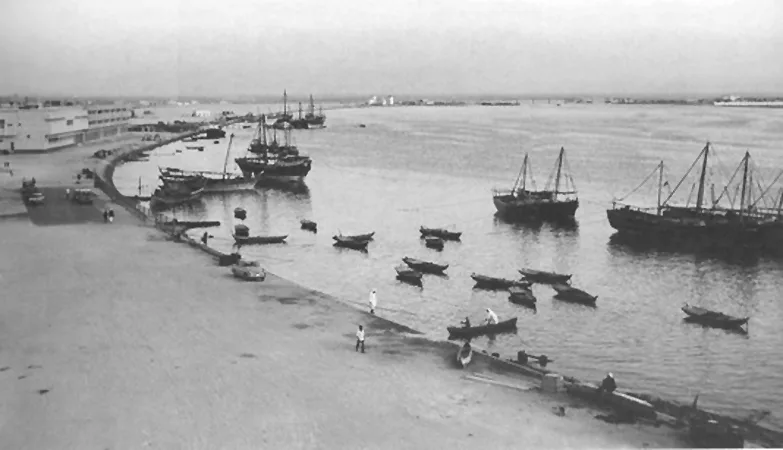
Dubai Creek in 1964: a later page in the port story that shaped the city. Noor Ali, public domain in the UAE.
How should this story be read?
Between Document and Memory
Archaeological sources establish the history of the Land of Frankincense and Julfar’s maritime importance. Recipes for dukhoon, wedding practices, and the expertise of sorting oud also live through family memory and contemporary practice. The booklet therefore presents them as living heritage rather than fixed dates. “Maritime incense routes” is used descriptively for trading networks, not as the formal name of a single historical road.